
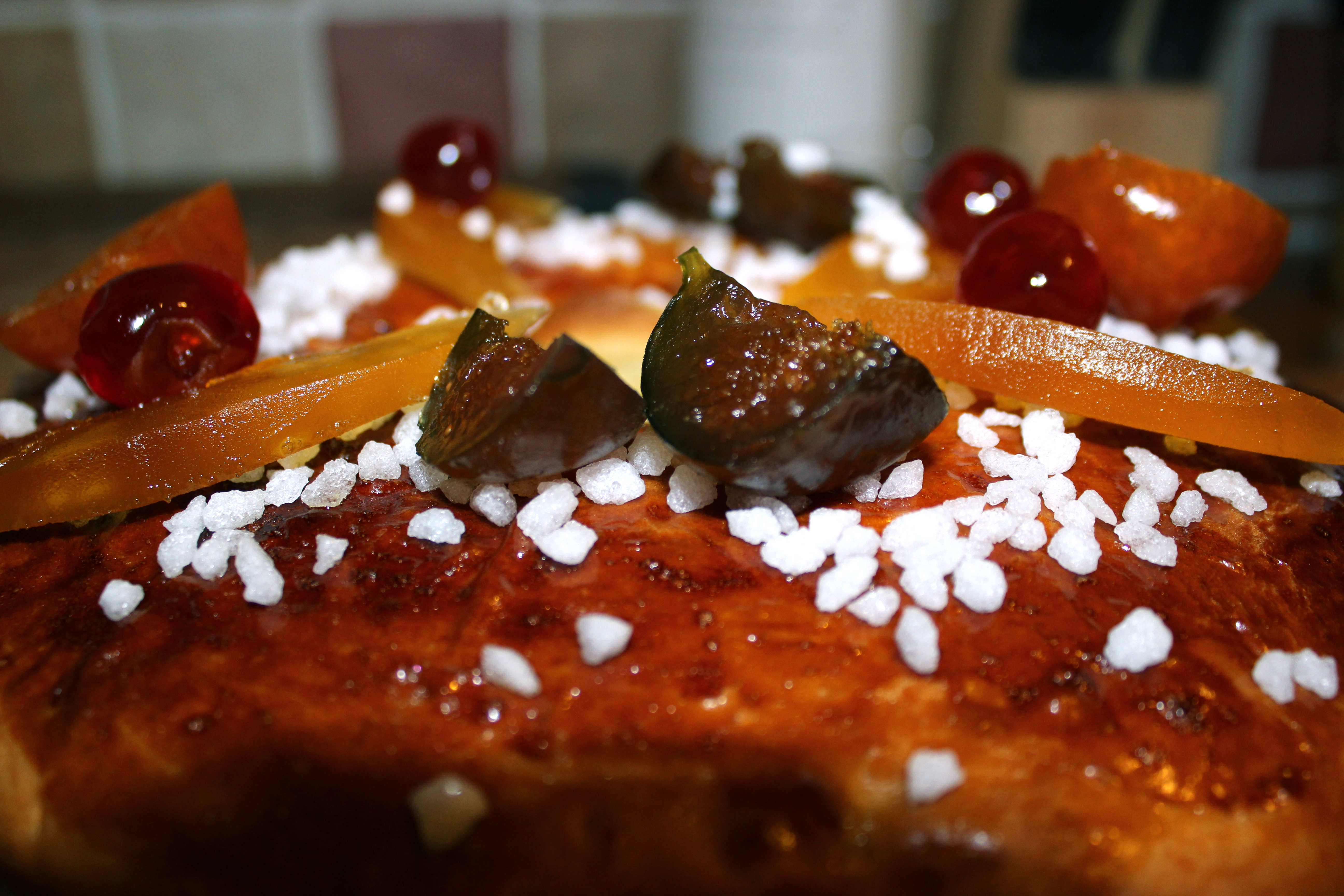
I used to go to the oldest bakery of my village every day after New Year’s eve to check their window for these beautiful shiny crowns topped with candied fruits. Gateau des rois is sold only in January to celebrate the Epiphany, when the kings bring gifts to little Jesus. Of course the North and the South of France have 2 different styles of cakes, the galette in the North and the brioche in the South. I am going to help you create the southern cake. In my region, when you buy this cake at the bakery or in supermarket it comes with 2 golden paper crowns. The tradition is that the youngest child sits under the table while someone else is cutting the cake. The hiding is essential as there is a “gift” hidden in the cake by the baker and you might reveal its position by cutting it. For each slice, the person hidden under the table gets to choose to whom that slice should go to. Children will desperately try to get the slice with the gift inside, even though it is usually a small figurine of the nativity, but it also means they will be allowed to wear one of the crown and choose their queen or king. For adults however, the person who gets the gift will have to buy the next Gateau des rois and still have to wear the crown…not as much fun.
The brioche should be light and buttery, and the candied fruits should be macerated in rum. And yes, we do serve this to children!
Ingredients for 2 medium cakes:
- 400g of candied fruits chopped in small cubes ( as much as you want really)
- 2 tbsp of rum
- Zest of 1 lemon
- 8g of salt
- 600g strong bread flour
- 75g caster sugar
- 3 eggs + 1 egg for brushing
- 150g unsalted butter, soft
- 1 tbsp of Orange Flower water
- 250ml full fat milk, tepid
- 12g of fast action yeast
- whole candied fruits to decorate, candied cherries and orange peels
- 50g pearl sugar to decorate
Macerate the cubes of candied fruits in the rum while you prepare the rest.
Mix the yeast in the milk and leave to rest while weighting the other ingredients. Place the flour, sugar, zest, eggs and salt together in a mixing bowl. Mix at a low speed and gradually add the milk. When the ingredients are well mixed, incorporate the butter bits by bits. Once the butter is nicely mixed in, the dough will be smooth, glossy and elastic. Add the orange blossom flower water and mix in. Placed in a greased bowl, cover with cling film and leave to double in size somewhere warm.
Place the cut candied fruits over a sieve to collect the sugary rhum and keep for later.
Without knocking the air out, cut the dough in half and roll each half into balls. With your finger or the handle of a wooden spoon, pierce a hole in the middle and rotate it to create a crown shape dough. Flatten the dough or cut it open with a knife to make a nice little well all around the crown to lay the candied fruits. It is time to add a little “gift” to your dough for people to find when they eat your cake. Not too small to avoid an A&E visit! The old fashioned gift is a dried broad bean, but a little porcelain figurine will work better for children.
Now seal the dough together around the fruits and make sure they can’t ooze out but squeezing the dough really hard together. Turn the crown around onto a tray covered with baking parchment. Re adjust the shape of the crown and leave to prove for 1h30 somewhere warm.
Switch the fan oven to 200°C and brush the cake with the egg. Cook for 25 minutes. The crown should be golden and firm to the touch. As soon as the cake leaves the oven, brush the sugary rhum syrup all over, sprinkle with the pearl sugar and decorate with your whole candied fruits. the cake to rest in its tin while you make the glaze. Best eaten on the same day.


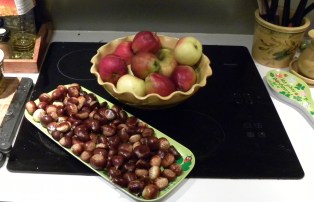 We found so many that day that I left the small ones behind and kept only the big chubby chestnuts to roast at home. We unfortunately don’t have a fireplace but they were still delicious roasted in the oven. Don’t forget to make a little incision in their skin carefully with a knife before cooking them to avoid chestnut explosions, fun to watch but very annoying to clean!

 Noémie's kitchen